
A quality set of leather shoes is a true investment—one that elevates your appearance, boosts your confidence, and, with proper care, lasts for years. Leather shoes have a legacy of durability and timeless appeal, making them a staple in every well-rounded wardrobe.
In this guide, you’ll discover everything you need to know before making your next purchase. We’ll explore the most popular shoe styles and their best uses, break down how construction quality affects comfort and longevity, and help you shop smarter for both value and true craftsmanship. Plus, we’ll highlight Bruno Marc's new Crafture collection. Whether you’re a first-time buyer or seasoned enthusiast, you’ll find practical tips for every step of your journey.
The Main Types of Leather Shoes
Dress Shoes
- Oxfords: The quintessential dress shoe, recognized by its closed lacing system and sleek silhouette. Oxfords are the ultimate choice for formal occasions like business meetings, weddings, and black-tie events, thanks to their clean lines and sophisticated appearance.
- Derbies: Slightly more relaxed than Oxfords, Derbies feature an open lacing system and a roomier fit. They're a versatile option for both business attire and smart-casual outfits.
- Brogues: Distinguished by decorative perforations (broguing) along their leather panels, Brogues add flair to both formal and semi-formal looks. Variations include full, semi, and quarter brogues, each with a different amount of decorative detail.
- Monk Straps: With a buckle and strap closure in place of laces, Monk Straps stand out for their modern edge and elegance. They effortlessly bridge the gap between formal and business-casual.
Business-Casual Options
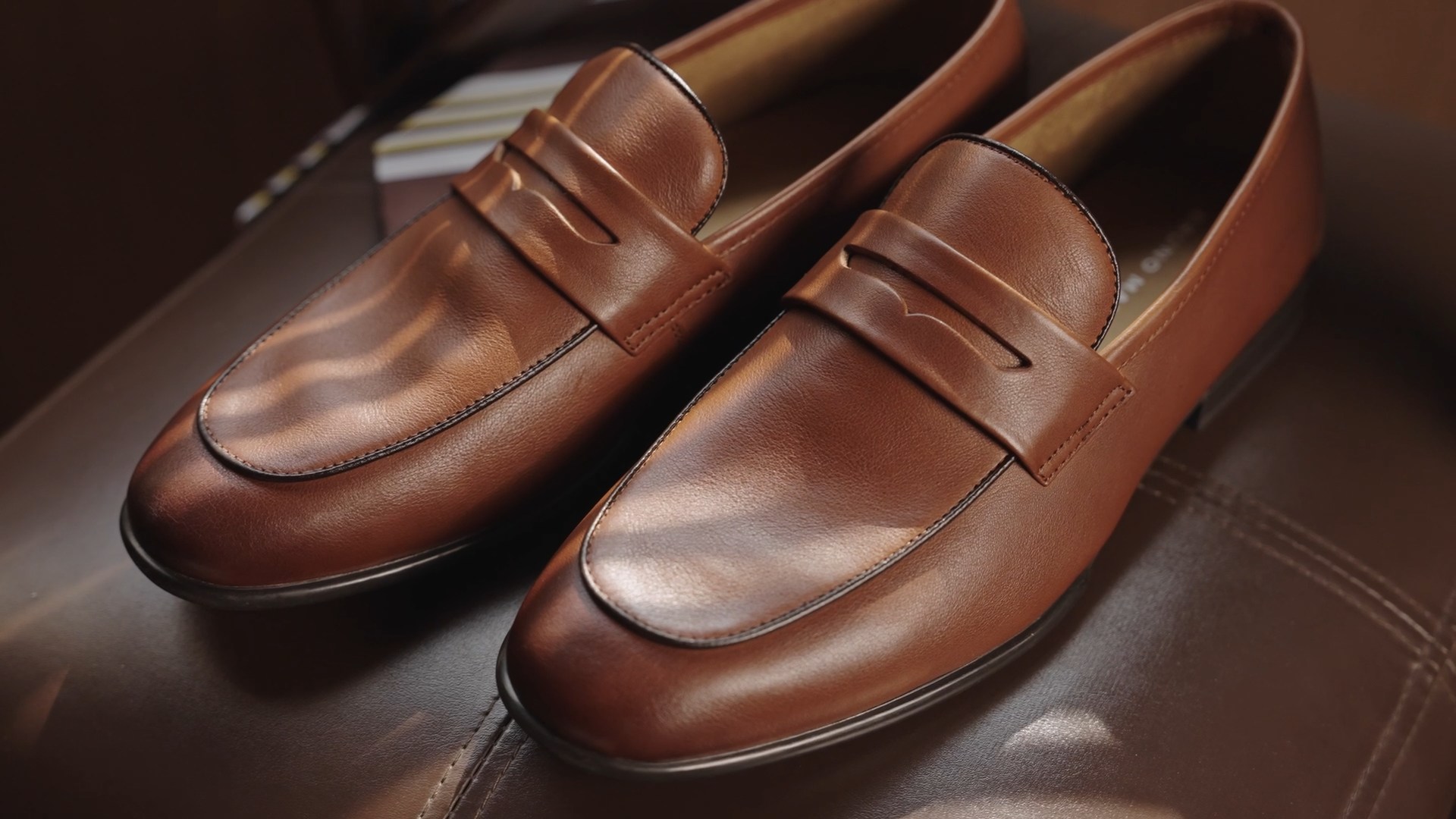
- Loafers: Effortless to slip on and surprisingly versatile, loafers range from penny and tassel to metal-bit variations. They work just as well with a tailored suit as they do with jeans, making them an excellent choice for the office or social gatherings.
- Chelsea Boots: Characterized by their sleek, ankle-high design and elastic side panels, Chelsea boots are easy to pair with formalwear or everyday looks. Their timeless silhouette never goes out of fashion.
- Chukka Boots: These ankle boots are defined by their minimal lacing (usually two or three eyelets). Chukkas are the go-to for relaxed office days or smart-casual weekends.
Casual Leather Shoes
- Moccasins & Driving Shoes: With flexible soles and soft uppers, moccasins and driving shoes offer casual comfort with a hint of sophistication. Perfect for laid-back summer days.
- Boat Shoes: Designed for warmer weather and easy-going outings, boat shoes pair well with shorts and casual trousers.
- Leather Sneakers: Combining the comfort of athletic shoes with the refinement of leather, these sneakers are ideal for dressing up your off-duty days.
- Work Boots: For those needing extra durability, work boots made from robust leather offer support and rugged style for more demanding environments.
Specialty & Statement Shoes
- Wingtip Boots: This bold style fuses the traditional brogue wing design with the practical coverage of a boot, making them a statement-making addition to your wardrobe.
- Opera Pumps: Reserved for the most formal black-tie events, opera pumps are classic, slip-on shoes often made with smooth leather and a subtle bow.
Shopping Tip: If you’re looking for classic styles with modern craftsmanship, the new Bruno Marc Crafture collection features time-honored favorites like Oxfords and Loafers. All made from true, high-quality leather. These designs make it easy to find a pair that fits your lifestyle, whether you’re headed to the boardroom or a weekend brunch.
Why Shoe Construction Matters?
A great-looking leather shoe is only half the story, how it’s constructed is just as crucial for comfort, durability, and value. Shoe construction refers to the way the upper (the leather portion), the insole, and the outer sole are combined. This craftsmanship affects everything from the shoe’s flexibility to its lifespan and even your ability to have it repaired later on.
Popular Shoe Construction Methods
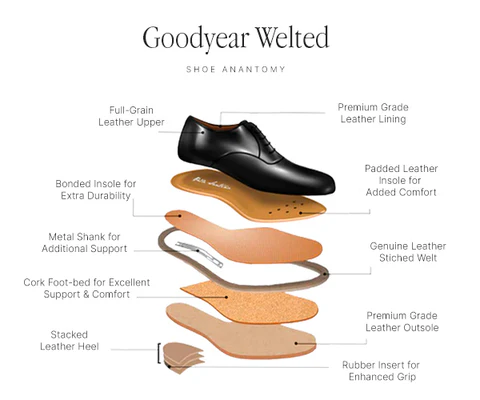
- Goodyear Welted Construction: Considered the gold standard in classic shoemaking, Goodyear welted shoes feature a leather strip (the welt) stitched to both the upper and the sole. This method allows shoes to be resoled multiple times, provides stability, and offers great water resistance. Expect a more structured, supportive fit that becomes more comfortable with time.
- Blake Stitched Construction: Blake-stitched shoes have the sole stitched directly to the upper, resulting in a lighter, more flexible shoe with a lower profile. While comfortable from the outset and easier to break in, they’re a little less water-resistant and can be trickier to resole compared to welted shoes.
- Cemented Construction: This is the quickest and most affordable method, where the sole is glued to the upper. Cemented shoes are lightweight and offer plenty of comfort for everyday wear, but they don't last as long as stitched styles and can’t typically be resoled. They’re best suited for casual wear.
Smart Buy: The Bruno Marc Crafture collection stands out for combining genuine leather uppers with reliable, high-quality construction methods. Whether you choose an Oxford, Loafer from this line, you can expect a shoe built to deliver both style and lasting performance at an approachable price point.
What to Look For Before You Buy
Even the best-looking leather shoes can fall short if the quality isn’t there. Knowing how to spot well-made footwear will help you avoid disappointment and ensure your new shoes stand the test of time. Here’s what to pay close attention to:
1. Stitching and Finishing
Look for tight, even stitching along all seams. Quality leather shoes should have no loose threads or sloppy edges. The finishing should be clean, with smooth joins and no visible glue where the upper meets the sole.
2. Leather Quality
Run your hand across the leather. It should feel supple yet firm—not plasticky or overly stiff. High-quality true leather (like that used in the Bruno Marc Crafture collection) will have a natural, consistent grain and feel smooth to the touch. Cheap leathers may have an overly shiny, artificial look or show wrinkles right out of the box.
3. Lining and Insole
Check inside the shoe. A leather or high-quality lining adds comfort, breathability, and helps your shoes last longer. The insole should be cushioned, supportive, and well-fitted to the shape of the shoe.
4. Sole Construction
Look at the sole edges—is it stitched, glued, or a combination? Stitched soles (especially Goodyear welted or Blake stitched) typically last longer and can often be replaced. Flex the shoe gently: it should bend at the ball of the foot but feel solid overall. The sole material itself should feel tough and durable, not thin or brittle.
5. Hardware and Details
If your style of choice features buckles, zippers, or metal bits (think loafers, monk straps, or boots), these should be smooth, sturdy, and free of rust or sharp edges. Pull gently to make sure hardware is well-attached.
6. Color Consistency
Quality leather shoes have a rich, even color, free from blotches, stains, or abrupt changes in shade. Natural color variation is beautiful, but avoid anything that looks patchy or poorly dyed.
Frequently Asked Questions (FAQ)
How long will good leather shoes last?
With proper care, true leather shoes from reputable brands can last anywhere from 5 to 15 years, or even longer. The lifespan depends on how often you wear them, the construction quality, and your maintenance routine. For example, shoes from genuine leather collections like Bruno Marc’s Crafture series are designed for durability and can serve you well for many years if maintained properly.
Do leather shoes stretch over time?
Yes, high-quality leather will naturally mold to your foot over time, providing a custom fit. However, they will not stretch dramatically, so always choose a pair that fits well from the start. Shoes that are painfully tight are unlikely to become comfortable, while slightly snug shoes usually break in nicely.
How do I clean and condition leather shoes?
- Dust and wipe: Use a soft brush or cloth to remove dirt or dust.
- Polish: Apply a matching leather cream or wax polish for shine and protection.
- Condition: Use a leather conditioner every couple of months to keep the leather soft and prevent cracking.
- Store with shoe trees: Insert cedar shoe trees to absorb moisture and maintain shape.